
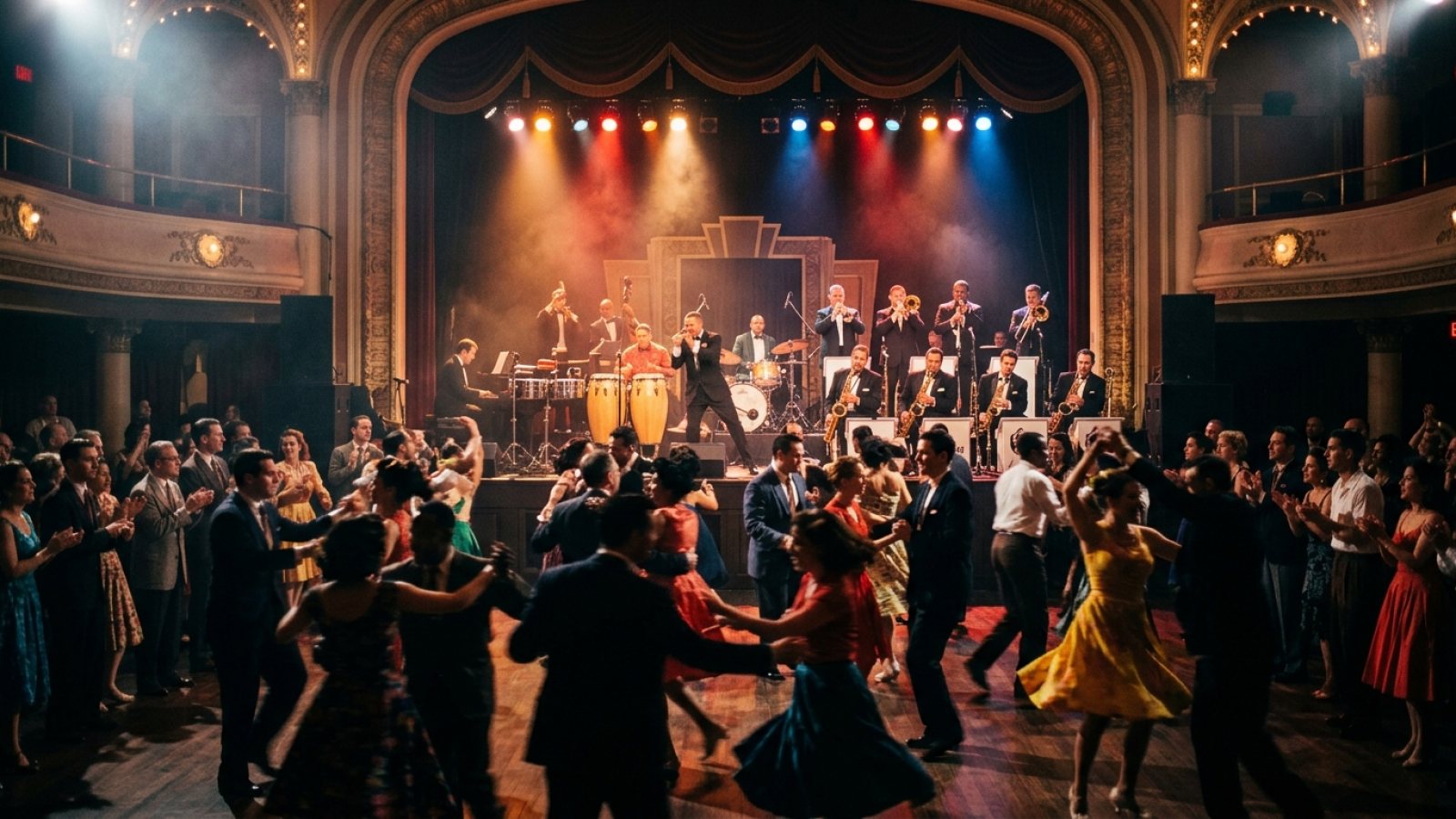
Son, Mambo, and the Palladium: Cuban Music's Road from Havana to New York
From the deep rhythmic roots of Cuba's Oriente province, son music journeyed to Havana, evolving into the electrifying mambo. This powerful new sound crossed the waters to New York City, where the iconic Palladium Ballroom became its global temple.
The pulsating heart of Cuban music, steeped in centuries of African rhythms and Spanish melody, didn't just stay on the island; it crossed oceans, evolving and electrifying stages from Havana to Harlem. This journey, propelled by migration, radio waves, and recording technology, transformed local genres into global phenomena, none more spectacularly than son and its high-octane descendant, mambo, culminating in the dazzling lights of New York City’s Palladium Ballroom.
From the Oriente's Fields to Havana's Salons: The Rise of Son
The foundational rhythm of Cuba's sonic explosion began its life in the rural Oriente province, a vibrant fusion of the tres (a three-double-stringed guitar), Spanish song structures, and the percussive power of African traditions. This was son, emerging in the late 19th and early 20th centuries, initially an informal expression of country life that gradually found its way into Santiago de Cuba and eventually, the bustling capital, Havana. By the 1920s, groups like the Sexteto Habanero and the Septeto Nacional, led by figures such as Ignacio Piñeiro, were refining son, giving it structure and a wider appeal. Piñeiro's "Échale Salsita" became an early international hit, showcasing the infectious call-and-response vocals, driving bass, and intricate montuno sections that defined the genre. This music was not static; innovators like Arsenio Rodríguez in the 1940s revolutionized son by introducing the conga drum into the ensemble, adding piano, and expanding the septeto to an orquesta, dramatically increasing its rhythmic and harmonic complexity. Rodríguez's sound, often dubbed son montuno, was heavier, brassier, and directly paved the way for the next wave, building a bridge between traditional Cuban sounds and the burgeoning big-band jazz scene in the United States.
Mambo's Explosive Arrival: A Rhythmic Revolution
The mid-20th century saw son’s evolution accelerate into a new, electrifying form: mambo. This wasn't merely an incremental change but a rhythmic explosion, a faster, more orchestrated iteration designed for dance floors and big bands. While its precise origins are debated, its development involved key figures in both Havana and New York. Arsenio Rodríguez's expanded son montuno certainly laid groundwork, but it was Dámaso Pérez Prado, a Cuban pianist, who in the late 1940s, first in Mexico City, then internationally, fully unleashed mambo's orchestral power. His arrangements, characterized by sharp brass accents, driving rhythms, and a dramatic sense of dynamics, turned mambo into a worldwide sensation. Simultaneously, in New York, another Cuban maestro, Machito (Frank Grillo), alongside his musical director Mario Bauzá, was crafting their own version of Latin jazz—the Afro-Cubans. Their groundbreaking work integrated Cuban percussion and rhythmic sensibility with the harmonic sophistication of American jazz, creating a sound that was both authentically Cuban and deeply modern. Tracks like "Tanga," though predating the term mambo, embodied the powerful synthesis they championed, fusing traditional drumming with intricate horn charts, and attracting a diverse audience that craved its sophisticated energy.
The Palladium Ballroom: Where Mambo Met the World
New York City quickly became the global epicenter for this new sound. By the 1950s, the Palladium Ballroom on Broadway at 53rd Street stood as the undisputed "Temple of Mambo." Here, the city's diverse populations—Latin, Black, and white—converged to witness and participate in the mambo craze. Big bands led by giants like Tito Puente, Tito Rodríguez, and Machito and his Afro-Cubans commanded the stage, their nightly battles of the bands legendary. The Palladium was more than just a venue; it was a cultural crucible where the music was constantly refined and celebrated. Dancers became stars in their own right, and the energy was palpable, attracting Hollywood celebrities and serious musicians alike. The music played here, a dynamic blend of Cuban rhythms, jazz improvisation, and American showmanship, spread far beyond the city's limits, influencing popular music, film scores, and dance forms across Europe, Asia, and Latin America. Artists like Celia Cruz, who would later become the "Queen of Salsa," honed her craft in this vibrant scene, embodying the cross-cultural exchange that defined the era. The Palladium's golden age was a testament to the transformative power of Cuban music, a vivid chapter in how Havana's deep traditions reshaped New York's soundscape and, in turn, echoed globally.
The journey of son and mambo from the sugarcane fields of Oriente to the dazzling stage lights of the Palladium represents a remarkable cultural dialogue. It’s a story of constant innovation, of resilient traditions meeting new technologies, and of human connection forged through rhythm. Even as tastes changed and new genres emerged, the foundational sounds shaped by these pioneers continue to resonate, reminding us that the greatest music knows no borders, only new horizons.
